
By Lisa Turcotte, CEMT
Animal Bodywork Academy of New England
Our clients want to do the best for their animals, otherwise they wouldn’t be our clients. Often this leads to those same owners trying products they’ve heard about or seen on the internet or at other barns. One of those items is the percussion massage gun.
“A massage gun can vibrate muscle, but only a practitioner can tell whether it’s helping or hurting the tissue. The difference isn’t force — it’s understanding.”
These guns go by various names and can range in price from less than $100 to well over $500. The massagers typically come with an assortment of interchangeable heads some of which are for use on bulk muscle groups (think hamstrings), the muscles of spine, neck, and the Achilles tendon. Massage guns produce a jackhammer type of motion which tries to mimic the rhythmic tapping, cupping, or hacking motions of tapotement, a Swedish massage technique.
Tapotement, a technique that involves the cupping, pounding or hacking of hands used by therapists, can produce an increase in local circulation and stimulate nerve endings by producing tiny muscular contractions which can help to reduce muscle spasms and tightness. When used by trained massage professionals the chance of injury is minimal. We know how long to use these strokes, when to go deeper and where the best places to use the stroke. Often, when we use it in at the beginning of the session it is to help warm up the tissues and we can adjust the depth depending upon the horse’s reaction. Diving right into the stroke in a deep and powerful way can be extremely uncomfortable on muscles that are cold and potentially shortened. Soft and lengthened muscles are less likely to cramp or spasm when forceful strokes are used.
The manufacturers of these massage guns state that guns can deliver the same benefits as deep tissue massage. While the guns can help relieve some symptoms it pays for us to look at the potential injuries caused by them when used by non-professionals among these are:
- Ruptured blood vessels
- Damaged muscle fibers
- Increased nerve sensation or lesions
- Increased muscle contractions or spasms
- Increase soreness the next day
There are specific instances a massage gun should not be used. If the animal:
- Is on anti-inflammatory medications – examples are Phenylbutazone (“bute”); Flunixin meglumine (Banamine); Ketoprofen; and Firocoxib (Equioxx).
- Has any area that is swollen
- Is ill or has cancer, broken bones or open wounds
Additionally, the gun should never be used over bones especially the neck vertebrate, spine, scapula, hip points or on the jugular. Often using it in those areas can produce a wincing or a jolt reaction from the animal.
They’re Buying It Anyway—Now What?
What if, after hearing the reasons not to use a gun, your client is still determined to buy and use a massage gun or tool? How do you steer them into purchasing something that is less risky?
You can recommend alternatives like the vibrational peanut or ball massager. The motion of this type of massager is more like a vibrating compactor. The action is much safer as the effect is spread out over a larger area, penetrates deeper and consists more of shaking or jiggling the tissue versus pounding it.
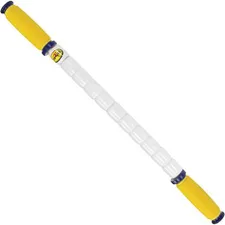
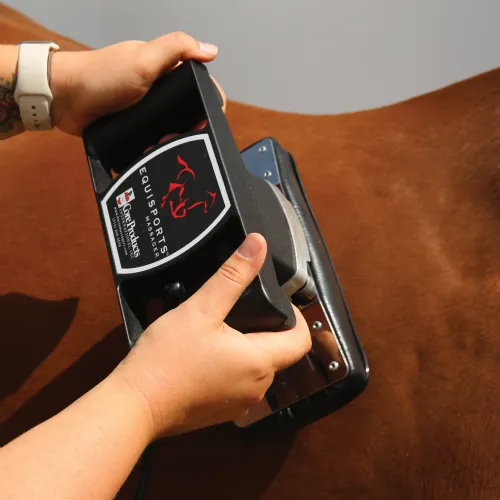
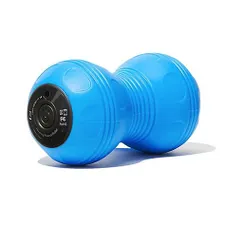
Another alternative is the Equistix, a rod massage roller tool designed for horses. The rod has segments of small spindles that act like mini massage rollers which segmentally compress and stretch muscle and is highly effective in the treatment of muscle pain and trigger points, as well as for preventative purposes These tools are effective and more importantly have minimal chance of doing harm to the animal. If the Equistix is not available there is a human equivalent called The Stick. It works the same but doesn’t have the bumpy rubber on the roller.
What if your client already owns a percussion gun and wants to use it? How can you help him or her use it in a safe manner and minimize the risk of injury? Initially you want to outline the damages of improper use of the gun and why it is different than the massage that you give their animal. A demonstration of the proper way to use the gun, explaining where, how long and how often to use the gun are a good start. A discussion of how it feels to use the gun in areas that are painful, demonstrating how it feels to use it too roughly, too long or at too great a speed is a good way to make the point.
Remember to tell them they to start with very short sessions and to hold the gun over an area 30 seconds or three passes, this will reduce the chance of bruising. Advise them to avoid all boney areas, the jugular, and genitals. Finally show them how to hold the gun at a 45-degree angle towards the body as this will reduce the impact to the tissue. Remind owners that animals can’t voice their complaints and they must be aware of the signs of discomfort in their behavior. In horses, moving away, lifting a leg to strike out, pinned ears and biting are all signs that they really don’t like what is happening to them.Backing off and turning off the gun, turning down the speed, or trying in a different area might give better results.
Owners have shown us how much they care for their furry charges. We can’t make them stop using guns or other tools, we must instead show them we are committed to help them care for their pets. In outlining the pros and cons of the tools they purchase and demonstrating the most safe and effective way to use the tools we are part of the animal’s care team.
The gun doesn’t replace us as professionals and just may make the owners more aware of their need for us.
When we slow down enough to listen, the animal will tell us everything we need to know. No gadget can compete with that conversation. The best care comes not from force or technology, but from awareness, patience, and connection — the true tools of healing.